









News
Delivery of British F-35Bs Delayed Again: Lower Cost F-35As Expected to be Prioritised at B Variant’s Expense

Dec
The British Ministry of Defence has confirmed that the delivery of the last seven F-35B fifth generation fighters from the United States will not arrive on schedule, withprior plans to have all aircraft delivered by the end of 2025 not being realised. The delivery of the fighters in 2026 will completed the first tranche order to equip the British Armed Forces, which was made up of 48 fighters. Defence Minister Luke Pollard stated that the ministry “expects to have received all seven F-35B aircraft ordered in Production Lot 17 by the end of April 2026,” confirming that although the fighters “should have been delivered by the end of 2025,” current planning assumes that “four of those aircraft will slip into 2026 and be delivered by April 2026 (a three to four month delay from the original contract).” He confirmed that “there is not a financial remedy for the delivery of Lot 17 aircraft.”
The United Kingdom is the sole Tier One partner in the F-35 program, rather than an external client for the aircraft, which prevents it from imposing penalties for delivery delays. The U.S. defence sector has struggled to keep fighter deliveries on schedule, with even its lightest and simplest fighter type in production, the F-16, seeing repeated delays in deliveries to its largest client of the past 20 years the Republic of China Air Force. This has fuelled growing calls in Taipei to take legal action to obtain compensation. It remains uncertain to what extent the United Kingdom will continue to invest in procuring the F-35B after 2026, as while the Ministry of Defence had initially planned to procure 138 of the aircraft, such plans are now considered wholly unaffordable.

The F-35B is the most costly type of tactical combat aircraft known to currently be in production anywhere in the world, with its cost being approximately 50 percent higher than that of the more widely produced F-35A, as a result of its specialised short takeoff and vertical landing capabilities. The fighter nevertheless has significantly more limited combat capabilities than the F-35A, including a much poorer flight performance, shorter range, and smaller main weapons bays which reduce its internal air-to-air missile carriage by one third. Sustainment costs and maintenance needs are also significantly higher. The F-35B was selected specifically to operate from the Royal Navy’s two Queen Elizabeth class aircraft carriers, which lack the arresting gear needed to operate conventional carrier based aircraft like the F-35C. The fighters are thus operated jointly by the Navy and the Air Force, with the United Kingdom being the only F-35 client to have relied on the B variant for the majority of its F-35 orders.
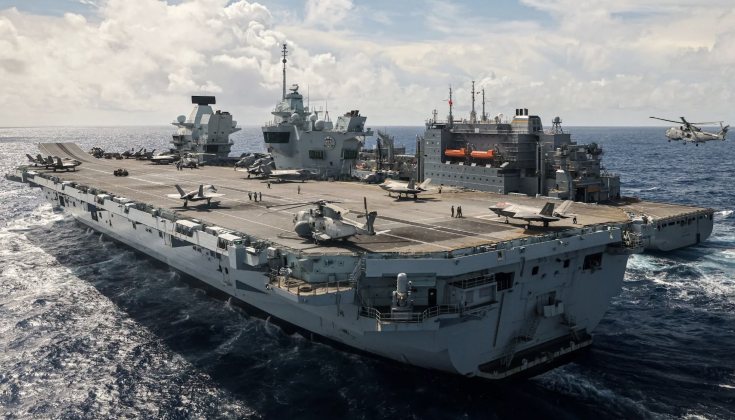
The F-35B’s primary client the U.S. Marine Corps in early 2025 announced plans to reduce procurements to 280 aircraft, down from a previously planned fleet of 353, with the intention of reallocating funds to more than double its planned fleet of F-35C fighters from 67 to 140. This was speculated to reflect dissatisfaction with the aircraft’s performance from makeshift airfields, as well as the need to field more capable fighters with longer reaches even if sacrificing versatility in where fighters can operate from. Following the Marine Corps, it is expected that the British Armed Forces will invest significantly less heavily in the F-35B, and prioritise funding for procuring F-35A fighters to be operated exclusively by the Royal Air Force. Major issues with the two Queen Elizabeth class carriers, including floods, breakdowns, and the cannibalisation of one ship to sustain the other, may further influence the decision, and make the fielding of sufficient F-35Bs for both ships appear less of a priority.
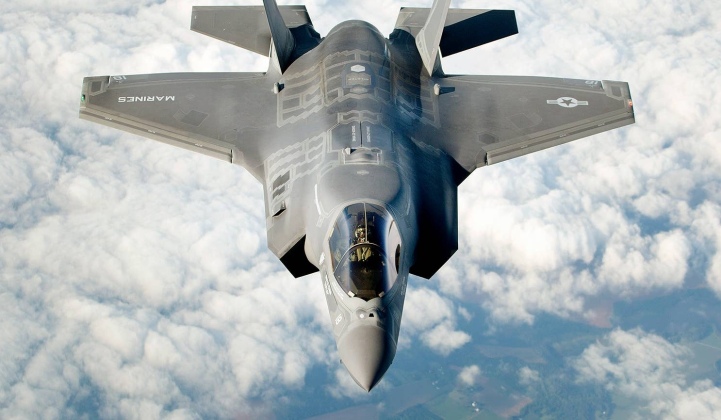
Plans to procure the F-35A were first confirmed in June 2025, and provide the country with a significantly more capable fighter at a much lower cost. F-35A procurements are considered critical as the Air Force’s sole current fighter type, the Eurofighter, is increasingly considered obsolete particularly due to its continued reliance on a mechanically scanned array radar. Despite lobbying efforts by local industry to continue Eurofigher procurements and avoid procuring the F-35A, the British Ministry of Defence had ended procurements, and in September confirmed plans to continue withdrawing the aircraft service, while releasing figures for planned scrapping of the aircraft. This makes the procurement of further F-35As particularly urgent, at a time when delays to F-35 acquisition plans have left the country’s total fighter numbers at a historically unprecedented low.
