

News
Rostec CEO Highlights Su-57 Fighter’s Ongoing ‘Comprehensive Modernisation’ Based on Combat Testing Feedback
Nov
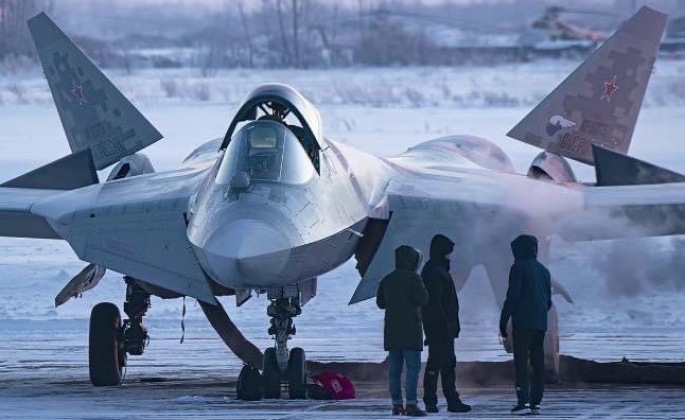
Following its limited service entry in 2020, and the formation of the first full battalion in 2024, Russia’s first fifth generation fighter the Su-57 has recently seen reports on its capabilities and planned future upgrades made increasingly frequently by prominent local sources. CEO of the state defence conglomerate Rostec Sergey Chemezov has elaborated on plans to continue to modernise the aircraft, and on what he perceives to be some of its advantages over rival aircraft fielded abroad. “The aircraft is still being refined,” he stated, adding that “work is underway toward a comprehensive modernisation that will encompass its components, electronics, and weaponry.” He dismissed the widespread foreign criticism of the aircraft as reflecting the competitive interests of other countries’ rival fighter industries, emphasising that the Su-57 has “gained high praise from both international partners and Russian pilots alike.”
Regarding the combat testing of the Su-57, which Russian sources have repeatedly claimed provides the program with an advantage over its rivals, Chemezov observed: “The Su-57 already outperforms many of its foreign counterparts in numerous aspects, and with further improvements, this advantage will only grow. Unlike its competitors, it has been tested across all combat scenarios – operating in Syria and now actively engaged over the current special operation zone. It has effectively demonstrated its capabilities in new tactical roles and confirmed the robustness of its stealth features.” The fighter’s level of combat testing remains unique, with the aircraft being able to launch air-to-surface missiles allowing it to stage more complex attacks for roles such as air defence suppression in ways its Western rivals the F-22 and F-35 cannot, the former indefinitely, and the latter until it receives much delayed Block 4 upgrades in the 2030s.
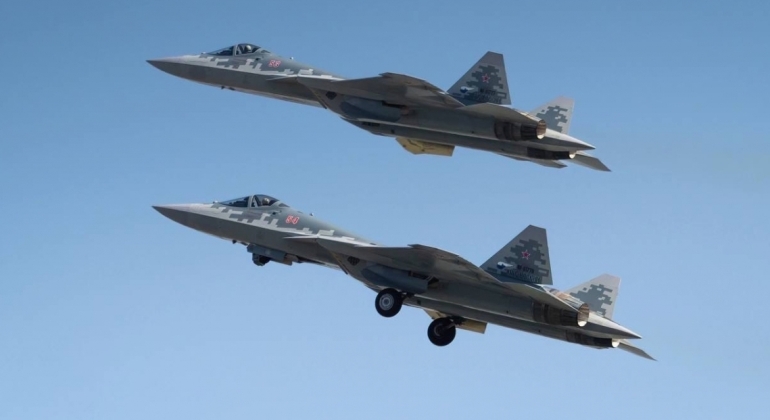
Su-57 combat operations in the Ukrainian theatre have included air defence suppression, air-to-air combat, and operations in heavily defended enemy airspace, as well as a range of precision strike missions. This places the aircraft entirely in a league of its own among fighters of its generation in the degree of combat testing it has been put through, and exceeding all post-Cold War non-Russian fighter types in its the complexity of the operations in which it has been combat tested. Head of the Sukhoi Design Bureau’s flight service Sergey Bogdan recently observed that this combat testing has allowed the Su-57’s design to be further refined and updated. “Until the aircraft is decommissioned, it will continue to be refined. We incorporate all modifications and innovations before they are introduced into production,” he stated regarding future modernisation plans.
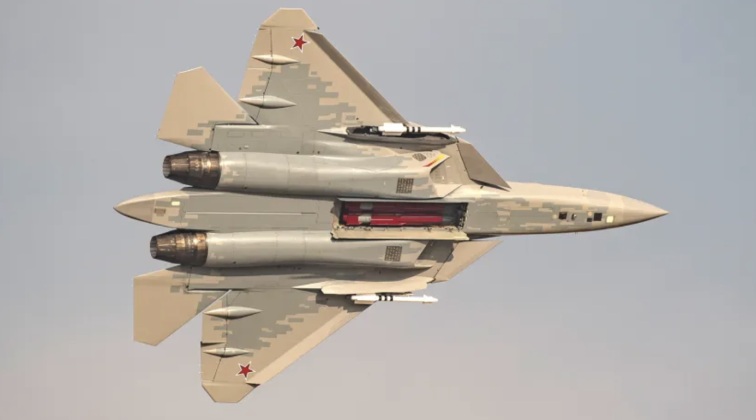
Although the Su-57 remains at an advantage in its degree of combat testing, the fighter’s capabilities are considered inferior to those of the F-35 and the new Chinese J-20 and J-35 in a number of respects. Most significantly, the Russian aircraft’savionics and its stealth capabilities are much more constrained by the lower standings of country’s industry in these fields, which could be particular disadvantages in the era of network-centric warfare. The fighter program has nevertheless compensated for this with a number of advantages, most notably a greater emphasis from an early stage on integrating a very diverse range of highly capable missile types, including hypersonic weapons, anti-radiation missiles, and various radar-evading cruise missiles. The fighter’s sustainment costs and requirements are also significantly lower than those of the F-22 and F-35 due to its simpler design that emphasis low maintenance, a notable result of which is its use of radar absorbent fireglass rather than stealth coatings.
