





News
New Unmanned Stealth Fighter From Turkey Achieves First Long Range Air-to-Air Missile Kill
Nov
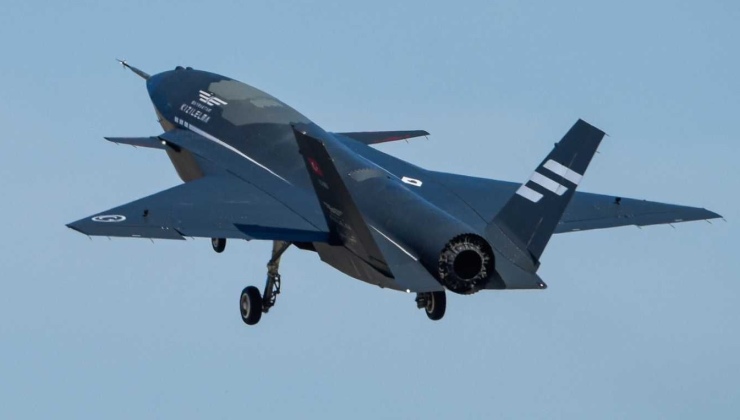
The Bayraktar Kizilelma unmanned fighter developed by the Turkish firm Baykar was on November 30 confirmed to have made its first beyond-visual-range air-to-air missile kill against a simulated target, after a live-fire test was conducted over the Black Sea. The indigenous Gokdogan missile was guided against a high-speed jet-powered target, confirming a groundbreaking capability to destroy aircraft at beyond visual ranges. Although there has been speculation that unmanned fighter programs in China and the United States have long since demonstrated similar capabilities, their testing has been conducted with significantly greater secrecy. Turkey’s combat aviation sector has received significant support and technology transfers from across the Western world, and in particular from the United States, with its position as a frontier NATO member making the strengthening of its aerial warfare capabilities highly beneficial to broader Western Bloc interests.
Although aircraft like the Bayraktar Kizilelma lack the sensor capabilities needed to facilitate long range air-to-air engagements, they can pair with other assets such as F-35 fighters and E-7 airborne early warning and control systems to provide targeting data. Such unmanned aircraft are expected to serve as ‘wingmen’ to support manned fighters. Turkey’s plans to modernise its aerial warfare capabilities have been set back significantly due to its expulsion from the F-35 program, meaning it will continue to lack fighters from the latest generations to pair with unmanned wingmen like the Bayraktar Kizilelma. The paring of stealth fighters with such supporting unmanned aircraft is considered a key requirement to achieve a ‘5+ generation’ capability, with sixth generation fighters under development in China and the United States expected to also benefit from such unmanned support.
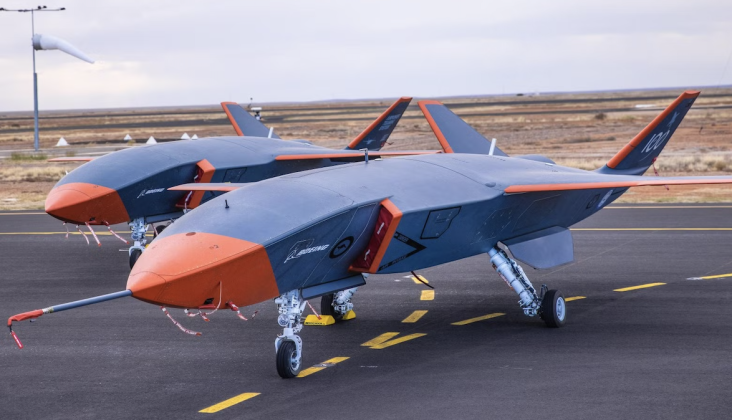
Earlier in November the Chinese People’s Liberation Army Air Force marked the 76th anniversary by releasing a film that for the first time showed the country’s GJ-11 Dark Dragon unmanned fighter flying in formation with the J-20 air superiority fighter and J-16D electronic attack jet. The rival Boeing MQ-28 Ghost Bat being developed by Australia and the United States to pair with the F-35, meanwhile, is expected to make its first test firing of the AIM-120 active radar guided air-to-air missile in December. The Chinese J-20S is currently the only fifth generation fighter with a twin seat configuration, and was developed to pioneer operations as a command post for unmanned aircraft. The ability of an officer in the second seat to serve as a drone controller makes the design optimal for such roles. Although Turkish industry remains much more limited in its ability to independently pioneer advances in unmanned aviation, with the country’s scale of research and development being highly limited, when benefitting from significant support from its strategic partners in the West it has had a number of high profile successes.
