


News
Russia Faces Fast Growing South Korean K9 Artillery Arsenal on its NATO Borders
Nov
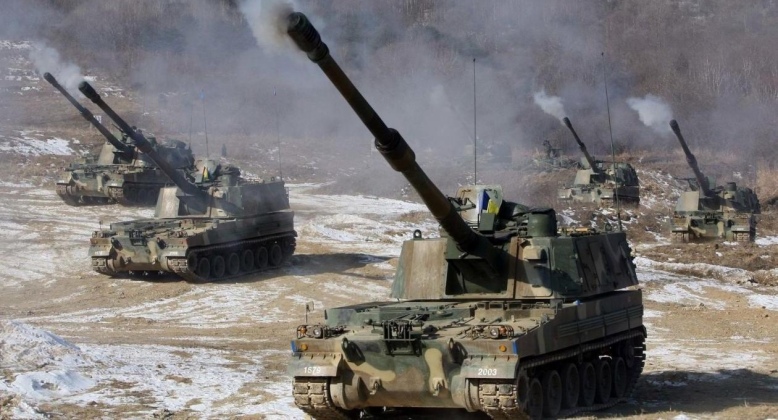
The Estonian Army has received a new batch of South Korean K9 Thunder 155mm self-propelled howitzers, as part of efforts to expand the service’s long range targeting capabilities. The country’s defence ministry reported regarding the procurement: “The newly arrived K9 ‘Thunder’ Howitzers reflect our long-term commitment to readiness, resilience, and cooperation. Estonia invests in security because our freedom is worth defending.” The K9 is one of multiple South Korean weapons systems which have gained a fast growing market share among NATO members, despite significant lobbying efforts by Germany to market its rival equipment. The armies of Finland, Norway, Poland, and Turkey all currently field the K9, while the Romanian Army is scheduled to begin receiving them before the end of the decade.
The deployment of K9 systems and other advanced South Korean equipment in fast growing quantities by NATO members has placed growing pressure on Russia’s defences, at a time when the country is seeking to bolster its own artillery forces after significant contraction to a under five percent of their Soviet era size. Among the K9’s most notable features are an automatic shell handling and ramming system, a rate of fire of six shells per minute, and an ability to fire on different trajectories in short succession. The new K9A1 variant boasts enhanced fire controls and computer operating systems, which allow the system to fire without running its main engine for reduced fuel consumption, reduced maintenance needs, and a higher degree of precision using both INS and GPS. New extended range ammunition has also improved the K9’s engagement range to 54km.
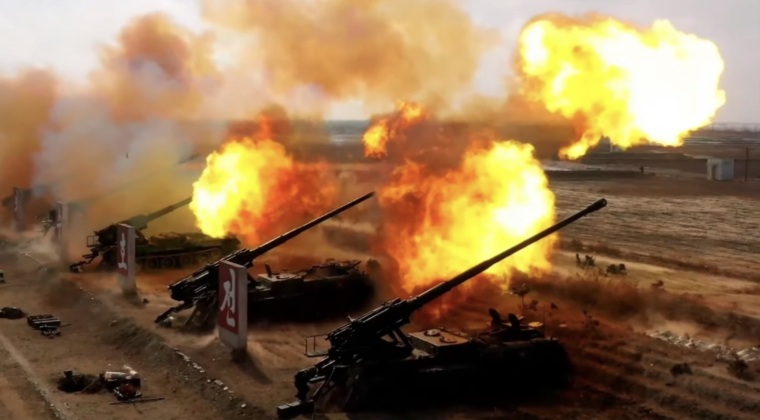
The Russian Army in 2023 brought its own next generation self propelled howitzer into service, the 2S35 Koalitsiya-SV, which benefits from a much higher degree of precision than its predecessors due to advanced laser guidance systems. The 152mm gun has a 70 kilometre engagement range, and can reportedly fire up to up to 20 rounds per minute, although the rate of fire is significantly slower if over a sustained period. As the system only entered serial production in 2021, however, it is fielded in only relatively limited numbers, production unlikely to match that of the K9 for the foreseeable future. Russian artillery capabilities have benefitted considerably both from very large scale deliveries of North Korean 122mm, 152mm and 170mm shells, but also from the delivery of 170mm self-propelled guns, the advanced capabilities of which have been singled out specifically be senior Ukrainian officers as a major challenge facing by Army units on the frontlines.
